Threshing Day Game: Find Your Dragon, Understand Your Match
Threshing Day Game: Find Your Dragon, Understand Your Match
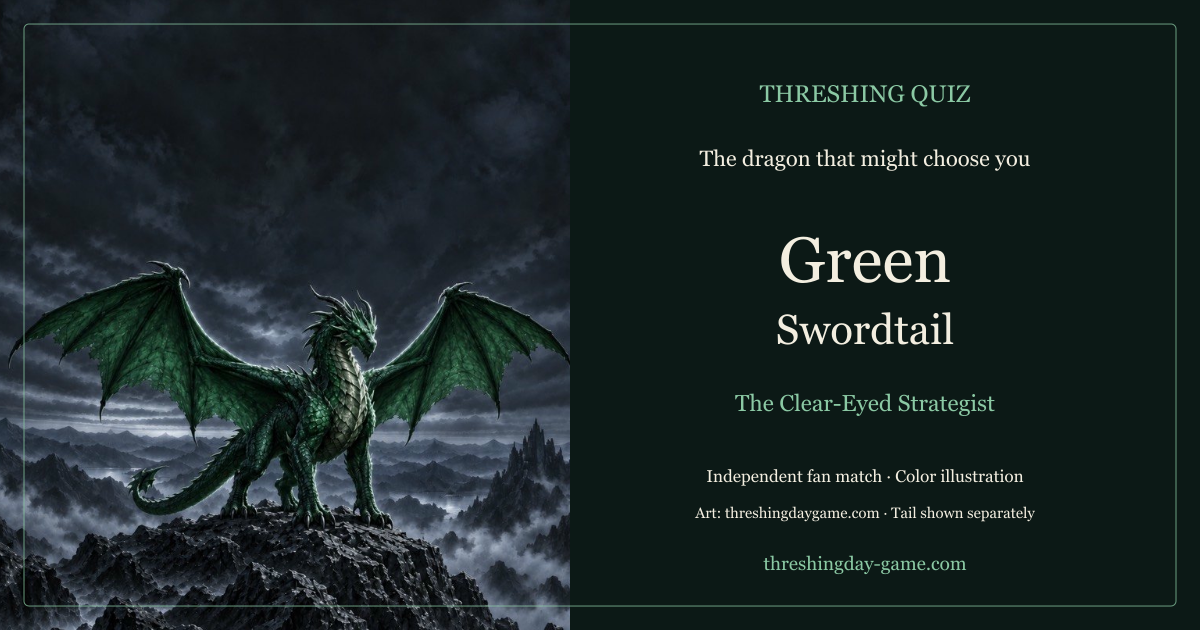
Part of the fun of generating a Pokémon is the reveal. You set a few preferences, let the generator choose, and discover a creature you might never have picked yourself. A dragon result card creates a similar moment of curiosity: which one will appear, and why that one?
The Threshing Day game adds a story to that anticipation. You read encounters, make decisions, and move toward a dragon meeting. If your main goal is a personality match and a downloadable card, there is also a twelve-question dragon quiz. Knowing which experience you want makes the first visit much simpler.
Here is how to get started, read the result, and compare another attempt without turning every choice into a hunt for the “best” dragon.
Why Threshing Day is showing up in dragon searches
The background is Rebecca Yarros’s Empyrean series, beginning with Fourth Wing. Threshing is the dangerous trial in which dragons choose riders. That premise gives the encounter its tension: a candidate can enter the valley with a plan, but a bond is not something they simply collect on arrival.
The recent interest follows the Threshing Day collection, released on September 29, 2026, and Dragonkind’s October 1 launch. The author’s book page introduces thirteen stories connected by that pivotal day.
If you arrived through a search for the Dragonkind game or Dragonkind by Rebecca Yarros, that is the connection worth knowing. The book world provides the setting; interactive choices let you imagine responding to its dangers yourself. You can follow a short trial without knowing every character or finishing the series.
Decide whether you want an adventure or a match
On the threshing day game homepage, Begin the trial starts a seven-decision browser adventure. Read the scene, select an action, and follow the consequences. You can fail before the final encounter, then restart immediately. No email, account, payment, or download is needed to enter the trial.
The same website also has a Threshing Quiz, reached through its dragon-quiz link. This is a twelve-question personality match: complete all the questions and receive a colour-and-tail result with an explanation. You can review answers before the reveal and download a card afterward.
| If you want to… | Start with… | What to expect |
|---|---|---|
| Follow a story with risk and consequences | The seven-decision trial | A run can end early; retries are immediate |
| Discover a dragon match and keep its card | The twelve-question quiz | Every completed quiz produces a match |
| Understand Threshing and the book connection | The world guide | Background reading you can return to after playing |
Choose the experience that fits your mood. Someone looking for a quick “which dragon would choose me?” result should not need to solve a survival route first.
What a Pokémon randomizer teaches us about dragon results
With the Random Pokémon Generator, filters such as generation, type, region, and rarity define the pool you want to explore. The surprise happens within those preferences. Changing a filter changes the question you are asking the generator.
A story choice does something different. It expresses an action within a situation: investigate, commit, hesitate, help, or take a risk. In the seven-decision trial, choices shape the route and danger, while the final encounter also includes chance. The twelve-question quiz instead interprets your answers as a match; the same answers produce the same result in its current version.
This distinction helps with a common question: does getting a different dragon mean you answered better?
Not necessarily. A different outcome may reflect different preferences, a changed route, or the chance involved in an encounter. A more unusual result is interesting to discover, but it does not automatically make the earlier one a mistake.
There is no reason to carry Pokémon battle expectations into a dragon card, either. A colour-and-tail pairing does not supply a Pokémon-style type matchup, evolution line, or set of competitive stats. Read the fields the result actually provides.
Read the explanation before chasing a colour
The quiz combines six colours with five adult tail forms, giving it thirty possible pairings. A result such as Green Swordtail contains two pieces of information: a colour and a tail type. The explanation adds the connection to the choices you made.
That explanation is usually more useful than the label alone. Two people can receive the same colour while getting different tails or recognizing different parts of their result. Ask which decision felt most natural, which one was difficult, and whether the explanation reflects those choices.
Black dragons attract plenty of attention, but the quiz is not a leaderboard. A black result is not a higher score than an orange or brown one. Trying to choose whatever sounds most impressive can also make the final explanation less recognizable.
For a first attempt, choose the response closest to what you would actually do. For a second, revisit one answer you were genuinely torn about. Keeping the rest of your answers makes it easier to understand the difference between two completed matches.
In the story trial, record the action and the consequence separately. “I investigated and survived” is an observation. A claim that the same action always guarantees a particular dragon needs more evidence. Successful screenshots and Dragonkind Threshing discussions can suggest things to explore, but they do not establish a universal answer sequence.
Keep the result in the form you want to share
The quiz’s result card is useful when you want the artwork and pairing together. Choose a square or story format, add an optional name, check the preview, and download the image. The square card is 1080 × 1080; the story card is 1080 × 1920.
A shared result link opens the general page for that dragon type. It does not carry your answer history or the optional name you put on the card. If you want friends to see your personalized version, share the downloaded image.
The seven-decision adventure has a different practical option: save a completed trial in the current browser or copy its result text. The collection keeps up to thirty saved trials, with the oldest replaced when another is added. Keep a separate copy of a favourite before clearing browser data or moving to another device.
For a casual comparison with friends, one first result each is a good place to start. Compare the choice you disagreed on before comparing colours. It gives the conversation more substance than repeatedly rerolling until everyone has the same desired label.
A few things to leave until after your first attempt
You do not need a full lore guide open beside the game. Learn the immediate goal, read the scene, and let the first result arrive before watching detailed reactions.
Afterward, Christina Pothen’s Threshing Day reaction offers a community perspective. It may reveal outcomes, so it is better saved for after your own first look.
If you are troubleshooting a missing code on the Dragonkind website, Rebecca Yarros’s FAQ is the relevant reference: it covers batched emails, spam checks, and waiting after a failed attempt. An answer list cannot fix an email-delivery issue.
The appeal of the Threshing Day game is the combination of anticipation and a reason to care about the reveal. Start with the story if you want uncertainty, or follow the dragon-quiz link on the threshing day website if you want to explore a match and keep its card. Either way, the interesting result is the one that gives you something to talk about.
Related resources
For more reading and community posts about the game: